Medellín is not a refined food city, and locals will tell you that with pride. Paisa cuisine is built around feeding hard-working people well: big portions, deep flavors, and very little fuss. If you come here expecting delicate plating, you'll be confused. If you come hungry and curious, you'll eat like a king. Here's what to look for and where to find it.

Bandeja Paisa: The Dish That Explains Everything

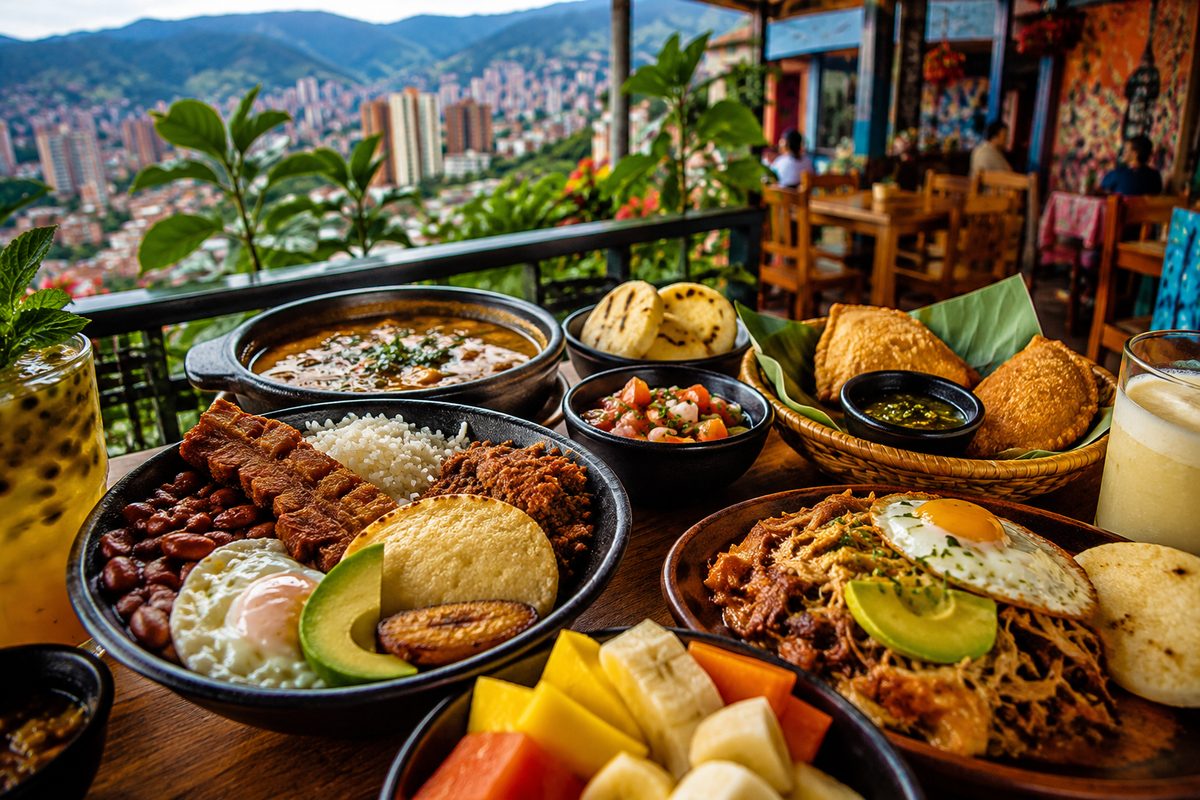
If there is one plate that sums up the paisa spirit, it's the bandeja paisa. It arrives on a tray that barely fits the table, and it contains more food than most people expect from a single meal. The standard version includes a big portion of red beans cooked with pork, white rice, ground beef or carne molida, a fried egg, chicharrón (fried pork belly), an arepa, a slice of ripe plantain, avocado, and a small morcilla (blood sausage) if the kitchen is feeling generous.

Every element has a purpose. The beans give richness, the chicharrón gives crunch and salt, the avocado cools everything down, and the arepa is there to mop it all up. Order one, share it if you want to try other things, and don't skip the hogao (tomato and onion sauce) that usually comes on the side.

Good spots: look for family-run restaurants in neighborhoods like Laureles, Envigado, or anywhere outside the tourist core of El Poblado. The less English on the menu, the more honest the price.

Arepas Are Not a Side Dish, They Are a Way of Life

Paisas eat arepas at breakfast, as a snack, alongside lunch, and sometimes at midnight. The local version is different from what you may have tried elsewhere: it's made from white corn, thinner and simpler than the stuffed Venezuelan style, and it tastes best hot off the griddle with a little butter and a slab of fresh white cheese on top.

The arepa de chócolo (sweet corn arepa) is a slightly sweeter variety worth trying, often sold at street stalls with queso fundido melting over the top. If you see someone eating one on a plastic stool at 7am, just sit down next to them and order the same thing.

Menú del Día: The Best Lunch You Can Have for Almost Nothing

This is the secret weapon of eating well in Medellín on any budget. The menú del día is a set lunch served Monday through Saturday at hundreds of small restaurants and fondas across the city. For a price that usually lands somewhere between a dollar fifty and three dollars depending on the neighborhood, you get a full meal: a soup to start (often sancocho, a hearty broth with yuca, corn, and chicken), a main plate with rice, beans, and a protein, a small salad or coleslaw, fresh juice, and sometimes a small dessert.

This is how most working Colombians eat lunch every day. The quality varies, but even an average menú del día is filling and honest. Head to Laureles around noon, walk one block off the main avenue, and you'll find them. In El Centro, they're everywhere.

Fruit You've Probably Never Seen Before

One of the genuine surprises of visiting Medellín is the fruit. Colombia's altitude and climate produce varieties that simply don't travel well enough to reach supermarkets elsewhere in the world.

  • Lulo: tangy and bright, somewhere between a lime and a passionfruit. Excellent as a juice.
  • Guanábana: creamy, tropical, slightly floral. Often blended into a thick juice or a postre.
  • Mangostino: a small purple fruit with sweet white segments inside. Nothing like a mango despite the name.
  • Maracuyá: passionfruit, tart and intense.
  • Tomate de árbol: tree tomato. Don't be fooled by the name, it tastes nothing like a regular tomato. Slightly sweet, slightly acidic, perfect in juice.

Visit one of the city's markets, especially the Plaza Minorista in El Centro, to see everything at once and try samples. You'll spend very little and eat very well.

Street Food Worth Stopping For

Paisa street food is simple, fried, and deeply satisfying.

  • Empanadas: small fried corn pastries stuffed with rice and potato or beef. Eaten with ají, a thin spicy sauce. You'll see them at almost every corner in the afternoon.
  • Buñuelos: light fried cheese dough balls. A breakfast staple and a Christmas tradition, but available year-round.
  • Mango biche: unripe mango sold in slices by street vendors, topped with salt, lime, and sometimes a hit of hot sauce. It's the snack you didn't know you needed.

Coffee Culture Done the Local Way

Colombia grows some of the world's best coffee, and yet the local coffee culture is humble and specific. In traditional tejo spots and fondas, locals drink tinto: a small black coffee, often quite sweet, served in a little plastic cup. It costs almost nothing and arrives without ceremony.

For better quality beans done with care, Medellín's specialty coffee scene has grown quickly. Neighborhoods like Provenza in El Poblado and parts of Laureles have solid independent cafés. But don't overlook a tinto at the market counter, because that's the real coffee culture here.

The Honest Take

Paisa food won't win awards for presentation. The vegetables are sometimes overcooked, the portions are always excessive, and the menus rarely change. But that's exactly the charm. This is food built for community and comfort, and eating it well means slowing down and eating where locals actually eat.

For a deeper look at what makes this city tick beyond the food, check out why visit Medellín.

If you want to explore the city's food and street culture with a local who knows where to go, take a look at our food and culture experiences. No hard sell, just good eating.